Wednesday, March 22, 2006

Gems of Wisdom: from our master Abu Dardaa Radhiallanhu

"If you knew what I know, you would go out to the jungle, weeping and crying and leave your property unguarded. But your hearts are heedless of the requirements of the Hereafter and you have, before you, worldly hopes and aspirations. That is why the world has become your master and all your activities are directed towards it; you have reduced yourself to a condition of stark ignorance. What is worse, some of you have become like the animals, indulging in lustful activities, not minding the evil consequences.

What has happened to you that you do not love one another, nor admonish one another, though you are brothers in Islam? There is discord among you because of your wrong desires, arising out of the corruption within you. If you are united in the cause of 'Deen' and affairs of 'Deen', your bonds of mutual relationship will be strengthened.


What has happened to you, that you counsel one another about affairs of this world, but do not do so about affairs of the Akhirah? You are incapable of admonishing those whom you love and do not give them good counsel about the affairs of the Hereafter. This is only because of your weak faith. If you had faith in the good and evil things of the Hereafter, like your belief in the good and evil things of this world, you would certainly give preference to the Akhirah. The Akhirah should have greater control over your affairs.

You may say that the needs of this world are immediate, while those of the Hereafter are remote. Just imagine how many activities there are, in this world, of which the fruits have to be reaped later. Still you toil and fret and struggle hard for them! For example, you work hard in the fields, for months together, hoping to reap crops in the end. Similarly, you take pains to plant trees in the garden, hoping to pick the fruit after years of hard labour and patient waiting. You have deteriorated, in matters of faith, so much that you do not care to gauge the level of your Imaan (faith) by doing things that would reveal it'.

'If you have any doubts about the revealed knowledge conveyed to us by Rasulullah Sallallaho alaihe wasallam, please come to us, so that we may show you the truth of this knowledge and make it abundantly clear to you. Come, we will show you the light by which you will be able to see, for yourself, that whatever Rasulullah Sallallaho alaihe wasallam said is absolutely true. You are no fools that we should regard you incapable of understanding it. For, you hold sound views about worldly affairs and act upon them most carefully. Then, what is wrong with you that you do not exercise wisdom, nor act with due care in affairs of the Akhirah.

What has happened to you? Why is it that you feel very happy over a paltry gain of this world and feel very sad over a little loss, to the extent that its effect is reflected in your faces. You complain of your 'sufferings', calling a little trouble a 'suffering' and hold meetings to console one another. But you are not grieved, nor feel sad, when you happen to miss an important religious requirement; your faces do not wear an _expression of sorrow.

When I see your indifference towards 'Deen', I feel inclined to think that Allah Ta'ala has forsaken you. You greet one another happily but everyone avoids saying anything which may be unpleasant, though true, to the other. He fears lest the other person should say to him something in return, which would displease him. So, you live amicably, keeping all dark thoughts to yourselves. Thus you have become corrupt from within though, outwardly, you seem to be enjoying life. And you seem to have all agreed not to think of death.

I wish Allah Ta'ala would grant me death and relieve me of sorrow on your account! And, I wish to join the company of those I love most dearly (meaning Rasulullah Sallallaho alaihe wasallam and the Sahabah Radhiallaho anhum). If they were alive, they would not have liked to associate with you, even for a short while. If there still remains an iota of good in you, take heed. For, I have told you what I think of you clearly and without hesitation, and I have spoken the truth. It is quite easy to achieve that which Allah Ta'ala has got in store for you (the boons of the Hereafter). And I seek help from Allah Ta'ala, both for you and myself'. "

Found via Alexandalus

Praying for the Deceased (SunniPath)

Imam Ghazali mentions the following story: “Said Bashshar ibn Ghalib al-Najrani, ‘I once saw Rabi`a al-`Adawiya, the worshipper [al-`abida] in my sleep, it having been my custom to pray for her abundantly. ‘Oh Bashshar ibn Ghalib,’ she told me. ‘Your gifts come to me covered with silken cloths upon salvers of light.’ ‘How should that be?’ I asked, and she replied, ‘Thus are the prayers of the living believers: when they offer a prayer for the deceased and are granted a response, that prayer is set upon salvers of light and covered with silken cloths, after which it is brought to the one who has died with the words, ‘This is So-and-so’s gift to you.’’”

Imam Ghazali continues, ‘The Emissary of God (May God bless him and grant him peace) said, ‘The dead man in his grave is like a drowning man shouting for help, as he waits for a prayer to come to him from his father, his brother or his friend. When it comes it is more beloved to him than the world and all it contains. Indeed, the gifts of the living to the dead are prayer and the petitioning of God for His forgiveness.’ [i][i] This should serve to remind us of two things. Firstly, that while we are alive and thus not as a drowning man depending on the prayers of another, we should embrace Islam in every facet of life, for in our graves we will be alone with nothing but our deeds. Secondly, we should remember to pray for our deceased ancestors, teachers, friends, martyrs, and all Muslims and pray that the same is done for us one day.

Rabi`a once said, “You are but a set of numbered days. When one day goes, a part of you goes as well. And with the disappearance of the parts, the whole is nearly lost as well.” [ii][ii]

- Taken from SunniPath Answers

Saturday, March 18, 2006

Rumi: The Promise of Tomorrow

Relying upon the promise of "tomorrow," many people have wandered around that door, but that tomorrow never comes.

Rumi, Mathnawi, 1:2279

Evil and Good are not Comparable

Say, "Evil and good are not comparable, even though the abundance of evil may tempt you. Remain observant of Allah, O men of understanding, that you may prosper."

Qur'an 5:100

Their Eyes Fill with Tears...

When they listen tot he revelation received by the messenger, you see their eyes fill with tears because of their recognition of the Truth. And spontaneously they say, "Our Lord! We believe. Inscribe us among the witnesses."

Qur'an 5:83

Burial Site of Nabi Harun (Peace Be Upon Him)


Burial Site of Nabi Harun (Peace Be Upon Him)


found via Seeker's Digest

Monday, March 13, 2006

A Weekend with Hakim Archuletta...

Assalamu'alaykum wa Rahmatullah,

I promised some people I'd post a few points from a recent weekend with Sidi Hakim Archuletta, on my blog...so here it is, insha'Allah...they're not a linear set of points (as he says his lectures aren't either)...just things that stuck out for me...


I should start by saying that meeting him was itself a healing for me -- his presence really warmed my heart and I found myself missing him before he even left, subhan'Allah. I pray Allah bring us together again soon.

The Messenger of Allah (Allah bless him and give him peace) said,
"There is a part of the body that, if sound, the entire body is sound"
and that part is the heart.
(Hadith #6 reported by Bukhari and Muslim)

Sidi Hakim started by telling us that the world 'health' comes from the Old English word 'wholth', so to be healthy means to be whole. Hikmah means "wisdom" and Allah is al-Hakim (the Wise) -- the principle in the hikmah tradition is that each thing has its place in the universe -- when this is proper, we have wholeness. So we have to find our place by finding our true nature. Why are we here? What are we? That is what Islam is here to tell us: we are here to worship Allah Ta'Ala...with our entire being!

Much of his message this weekend was about coming together as a people and a community. He mentioned that one Shaykh said that the flood in the time of the Prophet Nuh (peace be upon him) was one of water, and that the flood of our times is one of separation. In light of this he advised us to never eat alone and added there is a hadith in which we were told that the one who eats alone eats with Shaytan. We as Muslims believe we are what we eat (so eat whole, halal, organic foods made at home!), and we are also
who we eat with, and how we eat (eat with people, with your hands, on the ground!).

He touched on the long-term problems we are creating by being distant from family and friends -- situations where mothers are raising children in isolation, having to put them in front of TV sets so they can get their work done, and the adverse effects of such parenting on both mother and child.

At the heart of his message was this advice of coming together, knowing our neighbours, visiting one another, eating together, praying together, and being together.

The Messenger of Allah (Allah bless him and give him peace) said,
"the one who knows himself knows his Lord."

We need each other to get a sense of who we are.

The Messenger of Allah (Allah bless him and give him peace) said,
"the believer is a mirror to his fellow believer"

So why do we avoid that company? Because we are afraid to face where we are at -- it's sad/sorrowful to realize the time we've wasted, the state we're in...but we need to remember that the Prophet (Allah bless him and give him peace) changed the face of the planet in his lifetime -- we're not him, but we should aspire to be like him! The largest growth industry in the world is that of illicit drugs...why? Because people can't face their own lives -- they need to get "high". We don't have time for our own friends so we watch the 'friends' on TV because they can't disappoint or hurt us. We can't live life so we watch "reality television" and let other people 'live' for us...

Sidi Hakim also spoke quite a bit on the differences between genders. One Moroccon Shaykh said the wisdom behind men being obligated to pray in congregation while women may pray alone -- that it is partially because men need to be
made to come together whereas women naturally incline towards doing so.

He brought to light the fact that it was not by any accident that the Messenger of Allah (Allah bless him and give him peace) when he received the revelation, ran to his
wife Khadija for comfort and consultation. So, he said, from this men should realize the need to consult their wives, to listen to them -- he told us that Shaykh Darqawi said the beginning of the path is to hear/to listen...this means men should not always feel the need to fix things or feel their wives are just complaining, but that they just need to listen!

Sidi Hakim also spent a lot of time on some basic elements of life: breathing and standing. He made us realize that most of us don't breathe. Breath is life. The more you breathe, the more you live. Real breathing means you feel the breath in every part of your body -- right to your finger tips. He showed us how our standing is not in line with our natural way of doing so -- we lock our knees, we walk rigidly, our bodies are clamped together (especially those who pump weights!), our sitting ruins our posture...things to keep in mind in our daily lives...

So...

BREATHE!
and remember,

The Messenger of Allah (Allah bless him and give him peace) said,

"the root of all ailments is cold" ... so stay warm!

May Allah preserve Sidi Hakim, bless him abundantly, continue to make him a means of healing for people, and give him a long, healthy, happy life of 'ibaadah. Ameen.

Some links...

Hakim's Site
Lectures

Wassalam,

Salikah

Tuesday, March 07, 2006

Characteristics of the True Believer (Spiritual Tendencies)


Characteristics of the True Believer (Spiritual Tendencies)

Shaykh Yahyā Ibn Mu’ādh ar-Rāzī—may Allāh bless his soul—has collected in his books the characteristics of the true believer, some of which are that he/she:

  • Is very bashful.
  • Is harmless.
  • Is very beneficial to others.
  • Is unproblematic.
  • Is truthful.
  • Is hardworking.
  • Is brave.
  • Stays away from useless people and vain talk.
  • Builds understanding and brotherhood.
  • Is thankful.
  • Is compassionate to all.
  • Is generous.

And he/she stays away from the following:

  • Cursing.
  • Swearing.
  • Backbiting.
  • Looking for badness in other people.
  • Rushing into actions (before thinking properly).
  • Jealousy.
  • Enviousness.
  • Stinginess.
  • Pride.
  • Arrogance.
  • Love of Dunya.
  • Too much sleep.
  • Hypocrisy.

Marriage Advice from The Beatnik Sufis

Marriage Advice from The Beatnik Sufis

hilarious :) made me start thinking back to my doc martin days!

One has to be careful when choosing a Sufi-chick to marry. There are a number of pointers which we shall endeavour to posit. Of course, Sufi-chicks have their own lists of desirable characteristics, but we don’t know about this, because fortunately we are not Sufi-chicks, we are Sufi guys, or Sufi beatniks, and Sufi guys are far out. Sufi-chicks get together in their pastel Laura Ashley bedrooms to advise each other about pre-nuptial contracts. They have a great long list. We’re not worried about such a list, as once they see our honed physiques and square jaw-lines they will melt, and forget their lists. We, on the other hand, have a far more sophisticated method for determining the suitability of a Sufi-chick for marriage: shoes.

Sunday, February 26, 2006

Imam Zaid: The Ethical Standard of the Prophet Muhammad

You will surely be tested in your wealth and your lives. And you will hear from those given the scriptures before you and from the idolaters much abuse. If you patiently persevere, and remain mindful [of God], surely in this is a manifestation of firm resolve.
Al-Qur’an 3:186


The Ethical Standard of the Prophet Muhammad
By Imam Zaid Shakir

The ongoing “Cartoon Crisis” raises several issues. One of the most important is the incumbency of seeing the ongoing crisis as an opportunity to educate people in the West about our blessed Prophet, . Along those lines, one of the greatest things we can do is teach about the exalted ethical standard introduced by our Prophet, . That ethical standard is the bedrock of his mission and message.

In an age of instantaneous communications and globalized media it is important for Muslims to reaffirm our commitment to the prophetic ethical ideal. Under prevailing conditions, the sensationalized excesses of some Muslims, excesses that contradict the ethical teachings of our Prophet, , are often used to distort the perception of Islam in the West. That distortion in turn helps to create prejudiced attitudes towards Islam and Muslims.

I would argue that the images that insinuate a connection between our Prophet, , and terrorism are more informed by the hijackings, kidnappings, beheadings, and cold-blooded murder of unsuspecting civilians, all of which characterize many of our recent political struggles, than to any inherent biases or prejudices among the people of Europe and America. If we Muslims are going to contribute to changing how Islam and our Prophet, , are viewed in the West, we are going to have to change what we ourselves are doing to contribute to the caricaturing of Islam. That change can only be affected by sound knowledge coupled with exalted practice, and reviving the lofty ethical ideal of our beloved Prophet, .

[Read More...]

Remembering Malcolm X

February 21st, 2006 was the 41st anniversary of the assassination of our brother in faith, Malcolm X (may Allah have mercy on him and bless his soul).


Some quotes of Malcolm from the Offical Web Site of Malcolm X:

  • "Don't be in a hurry to condemn because he doesn't do what you do or think as you think or as fast. There was a time when you didn't know what you know today."
  • "A man who stands for nothing will fall for anything."
  • "There is no better than adversity. Every defeat, every heartbreak, every loss, contains its own seed, its own lesson on how to improve your performance next time."
  • "I believe that there will ultimately be a clash between the oppressed and those that do the oppressing. I believe that there will be a clash between those who want freedom, justice and equality for everyone and those who want to continue the systems of exploitation."
  • "Without education, you're not going anywhere in this world."
  • "You can’t separate peace from freedom because no one can be at peace unless he has his freedom."
  • "I am not a racist. I am against every form of racism and segregation, every form of discrimination. I believe in human beings, and that all human beings should be respected as such, regardless of their color."

Friday, February 24, 2006

Shaykh Hamza Yusuf and Haroon Siddiqui - The Cartoon Crisis

Shaykh Hamza Yusuf Interview on Danish TV - The Cartoon Crisis - Video

May Allah Most High preserve Shaykh Hamza Yusuf, and make his voice and views heard ever-increasingly in these times of trouble and distress.

Found Via Seeker's Digest

Alternatively, everything Haroon Siddiqui, the Toronto Star's editorial page editor emeritus has written on the matter has been excellent, as his articles always are. May Allah preserve him and reward him for clear thinking and solid writing.

Thursday, February 23, 2006

SunniPath Academy - Essentials Series

Love (Spiritual Tendencies)

From Spiritual Tendencies:

Shaykh Abū al-Qāsim al-Qushayrī—may Allāh bless his soul—said:

Mahabba (love) is a condition which man feels in his heart, too subtle to be expressed in words. This subtle spiritual state leads the worshipper to recognize the greatness of God, instills in him the desire, above all things, to please God, makes him unable to tolerate God’s absence, induces in him constant excitement at the thought of God; he finds no rest without God and feels an intimate comfort in continual thought of Him. Yet the idea of the love of man for God does not imply physical attraction and possession. How could it do so—since the true Infinite is too holy to be fully attained or reached or comprehended. It is more to the point to describe the man who knows mahabba as being completely lost and overwhelmed in the beloved, than to refer to the relationship as one of possession. If the lover were described as submerged in the beloved, it would be more adequate than if they were described as being together.


Sunday, February 19, 2006

When Allah Loves a Servant

The Prophet (Allah bless him and grant him peace) said, "When Allah Most
High
loves a servant, He calls upon Jibra'il: 'I indeed love so and so,
therefore
love him.' Thus Jibra'il loves him, and calls out to the Folk
of the
Sky: 'Allah indeed loves so and so, therefore love him.' Thus, the
Folk of the
Sky love him, and acceptance is established for him on earth."

(Imam al-Nawawi, Riyad al-Salihin, Hadith # 387)

Thursday, February 16, 2006

30 Days as a Muslim in America

Really cute video about a white, Christian, American who goes to 'live as a Muslim' for 30 days.

Google Video: 30 Days as a Muslim in America

May Allah bless him with all good in this life and in the hereafter. Amin.

Found via Seeker's Digest

Wednesday, February 15, 2006

Take a Minute...

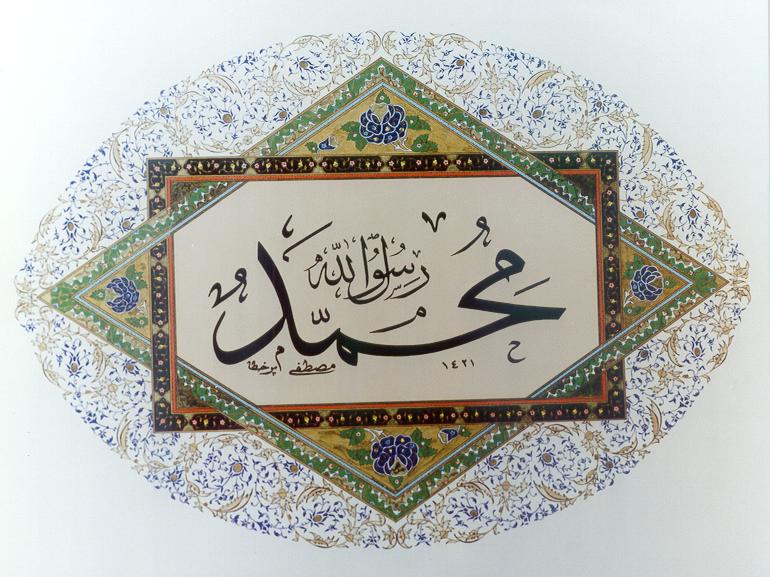
...and send blessings on the beloved of Allah, the best of creation, the chosen one, Muhammad...


May Allah bless him abundantly and grant him the most perfect peace.

An Ocean Filled with Pearls

His words were filled with such eloquence and wisdom, as though an ocean abided inside him, and the ocean filled with eloquent pearls. The light that shone from every pearl became a criterion of right and wrong.

- Mawlana Rumi, Mathnawi, 2:849-51

Tuesday, February 14, 2006

Shaykh Abdullah Adhami: A Live Online Interview About the Danish Cartoons and the Muslim Reaction

The Danish Cartoons and the Muslim Reaction
A Live Online Interview with Shaykh Abdullah Adhami

Saturday, February 18th at 2:00 PM EST / 11:00 AM PST / 7:00 PM London

Registration

SunniPath Academy is excited to announce a special live online interview and Q&A session with Shaykh Abdullah Adhami. Please click the link below to register for this event:

www.SunniPath.com

The event is free and all are welcome.

Background

A Danish newspaper printed the cartoons of our beloved, the Prophet Muhammad, peace be upon him. The cartoons were later found in other newspapers and websites. The Muslim world reacted. Some reacted peacefully, while others did not. Who is to be held responsible? Are the reactions of Muslims justified? Should we boycott Danish products? How do we, as Muslims, properly react? The Shaykh will address these questions and others in his interview with SunniPath.


Monday, February 13, 2006

Rumi: The Visions Now Revealed to You...

The visions now revealed to you,
once they seemed absurd to you.
From ten prisons His bounty released you.
Make not the desert a prison for you.

- Rumi, Mathnawi, 3:3656-57

Allah is Your Protector

If Allah is your protector, none can overcome you, and if He forsakes you, then who can help you? Trust Allah and have faith in His sovereign power. - Qur'an 3:160

Sunday, February 12, 2006

SunniPath Academy - Registration for Spring 2006 Semester Now Open!

SunniPath Academy


Reliable Islamic Knowledge in an Accessible Medium

  • Registration for Spring is now open. Classes will begin February 25
  • Courses offered across several disciplines and levels of difficulty
  • Get a taste for our courses. Listen to some sample audio
  • Student interview audio excerpts on the Academy

Learning Tracks

Essential Learning

This series of courses covers what students need to know to make
their worship of Allah and dealings with people valid and proper, and
according to the sunna of the Messenger of Allah (peace and blessings
be upon him). These courses are sufficient to give people clear
understanding of what they need to know about matters of worship and life.

Advanced Learning

This series of courses build on the Essential Learning track to further

ground students in the Islamic sciences. Students who successfully
complete this learning track will be able to navigate the modern world
within a religious context, allowing them to fulfill public religious
functions such as public speaking, community activism, and leadership.
This track is still under development.

Arabic Language

This series of courses are a bridge between the Essential and Advanced

learning tracks and the Seekers of Knowledge learning track. The goal
of this series of courses is to develop sufficient language skills to understand
classical religious texts in their original Arabic. This track is still under
development.

Seekers of Knowledge

These courses are for serious students of knowledge who have spent

time learning the religious sciences and want to further their knowledge
of specific disciplines by studying classical texts in their original Arabic.
Most of these courses require a formal application from the students
.

Electives

These are elective courses that students take to fulfill breadth requirements

in the various learning tracks.

The Courses

Essentials of Worship – Prayer, Fasting, Zakat, and Hajj (Hanafi Fiqh) – Part 2

Based on Shurunbulali’s Ascent to Felicity

Tafsir al-Jalalayn Explained

Understanding the Last Juz of the Qur’an

Absolute Essentials of Islamic Belief

Ghazali's Primer on Faith Explained

Applied Grammar and Rhetoric

Translation and Tafsir of the Last Juz of the Qur’an

Essentials of Islamic Belief

Laqani’s Jawharat al-Tawhid Explained

Essentials of the Lawful and Unlawful (Hanafi)

Applying the Shariah in one's life and conduct

Essentials of the Lawful and Unlawful (Shafi’i)

Applying the Shariah in one's life and conduct

Essentials of Worship – Zakat, Fasting, Hajj, and Sufism (Shafi’i Fiqh) – Part 2

Based on Imam Nawawi’s Al-Maqasid

Lessons from the Life of Our Beloved Messenger (peace and blessings be upon him)

Understanding & Loving the Prophetic Example

Matn Abi Shuja Explained: Part 2

A Seeker of Knowledge Series Live Course

Matn al-Ajurrumiyya Explained

A Seeker of Knowledge Series Live Course

Money Matters

Everyday Transactions, Monetary Dealings, and Finance

Mukhtasar al-Quduri Explained, Part 1: Worship

A Seeker of Knowledge Series Course

Mukhtasar al-Quduri Explained, Part 2: Trade and Financial Matters

A Seeker of Knowledge Series Live Course

The Absolute Essentials of Islam - Hanafi

A Basic Hanafi Manual of Faith, Prayer, and the Path of Salvation Explained

The Absolute Essentials of Islam - Shafi’i

al-Risala al-Jami’ah Explained

The Oft-Recited Suras

The Tafsir of Surah Kahf, Waqiah, and Yasin