Wednesday, September 06, 2006

...back!

Bismillah

Assalamu'alaykum wa Rahmatullah wa Barakatuhu,

Alhamdulillah, back from my summer off...visited Rome, Athens, Istanbul and Konya...pictures/reflections coming shortly insha'Allah!


A breathtakingly beautiful view of the Aya Sofya at Sunrise.

All praise is due to Allah. Peace and Blessings on the Chosen One, his family, companions and all those who follow him until the last day.

Ameen.

Wassalam,
Salikah

Monday, July 17, 2006

Muslim While Flying

Couldn't resist posting this one:

Muslim While Flying (Found via DP)

...and with that...insha'Allah, see you in September '06 :)

Friday, July 14, 2006

Have a Great Summer...!

In the Name of Allah, Most Merciful & Compassionate
Peace and Blessings be upon the final Prophet and Messenger, Muhammad, his family, companions and all those who seek to follow his blessed way until the Last Day


Assalamu'alaykum wa Rahmatullah wa Barakatuhu,

Insha'Allah, I pray this post finds you all in the best of health, happiness, and times. Just a note to let readers know I'm taking the rest summer off from the blog. Insha'Allah, I'll be back at it in September 2006. In the meantime, for every visit you would have made to this blog, please read some Qur'an :) ...and please remember my family and I in your blessed du'as. May Allah grant you every good in this life and in the hereafter.

Wassalamu'alaykum wa Rahmatullah,
Your Sister,
Salikah

Wednesday, July 12, 2006

Take a Minute...

...and thank Allah for all the blessings in your life.

Alhamdulillah, all praise belongs to Allah Alone.

Thursday, July 06, 2006

Between The Past And The Future

Your life in the present moment is in between the past and the future. So what has preceded can be rectified by tawbah (repentance), nadam (regret) and istighfar (seeking Allaah’s forgiveness). And this is something that will neither tire you, nor cause you to toil as you would with strenuous labour. Rather it is an action of the heart. Then as regards the future (then it can be corrected) by withholding yourself from sins. And this abandonment is merely the leaving of something and to be at ease from it. This also is not action of the limbs, which requires you to strive and toil. Rather this is a firm resolve and intention of the heart – which will give rest to your body, heart and thoughts. So as for what has preceded, then you rectify it with repentance. And as for the future – then you rectify it with firm resolve and intention. Neither of these involves any hardship or exertion of the limbs. But then your attention must be directed to your life in the present - the time between two times. If you waste it, then you have wasted the opportunity to be of the fortunate and saved ones. If you look after it, having rectified the two times – what is before and after it, as we have said – then you will be successful and achieve rest, delight and ever-lasting bliss. However, looking after it is harder than that which comes before and after it, since guarding it involves keeping to that which is most befitting and beneficial for your soul, and that which will bring it success and well-being.

Imam Ibn ul Qayyim al Jawziyyah

Tuesday, June 27, 2006

Nations and Tribes

O mankind! We created you from a single (pair) of a male and a female, and made you into nations and tribes, that ye may know each other (not that ye may despise each other). Verily the most honoured of you in the sight of Allah is (he who is) the most righteous of you. And Allah has full knowledge and is well acquainted (with all things).
(Yusuf Ali translation - Qur'an 49:13)


My local masjid has this ayah printed on a banner that hangs in the gymnasium/extended prayer hall...and growing up, when I my heart first consciously began to incline toward practicing this beautiful deen of ours, the ayah always resonated with me...each time I'd see it, I'd be filled with a certain, unmistakable peace...the knowledge that this was the way for all of mankind -- regardless of colour, culture or language, and free of all castes -- that Allah had made us all and that He loves us all. I thought I'd post it to remind myself and others who read this blog, that this is really the way of Allah, and that we need to pay more than just lip service to this ideal that is free of all racism, if we are to unite and be successful as an ummah at both the micro and macro level -- Arabs are not superior to Persians, Persians are not superior to Indo-Paks, and as much as I love being Punjabi, we are not superior to Hydrabadis (nor are they superior to us!)..and well, you get the point.

We
must come to truly and sincerely love one another.

Wassalam,
Salikah

Time with Mufti Taqi: Smiling through sickness, and the hadith of mercy (Seeker's Digest)

Time with Mufti Taqi: Smiling through sickness, and the hadith of mercy

June 28th, 2006

Over the last few days, some of us have been spending a lot of time with Mufti Taqi Usmani, as he fell rather ill during the Islamic Fiqh Academy’s annual session, here in Amman (Jordan.) [He is much better now, Alhamdulillah.]

It has been amazing how the noble shaykh has been smiling and joyous throughout his illness and subsequent weakness–and how patient he has been under the barrage of questions that has been showering down upon him.

The scholars at the conference–many of the leading scholars of our Umma–have amazing deference and respect for Mufti Taqi. Some scholars, including Shaykh Muhammad Adnan Darwish, came down from Syria just to visit him briefly, and to seek his du`a’ and ijaza of baraka. Other notable scholars, such as Shaykh Akram Abd al-Wahhab al-Mawsuli, visited him. Mufti Taqi and Shaykh Akram exchanged ijazas, after each insisted that they were unworthy of such a matter.

Questions and the Hadith of Mercy

There was a beautiful majlis in which these scholars from Syria, Jordan, and Iraq asked Mufti Taqi a number of questions on contemporary issues, and sought his guidance.

Then Shaykh Iyad al-Ghawj asked the Shaykh to transmit the “Hadith al-Musalsal bi’l Awwaliyya,” a famous Prophetic hadith transmitted (with contiguous isnad) with each narrator having heard this particular hadith first before others from the person above them in the chain. The hadith is, without the full chain, is related by Abd Allah ibn Amr (Allah be pleased with him), that the Messenger of Allah (peace and blessings be upon him) said,

“The merciful are shown mercy by the All-Merciful. Have mercy to those on earth, and the Lord of the Heavens will have mercy upon you.” [Tirmidhi]

عن عبد اللَّه بن عمرو - رضي الله عنهما - قال: قال رسول الله صلى الله
عليه وسلم: «الراحمون يرحمهم الرحمن، ارحموا من في الأرض يرحمكم من في
السماء

Mufti Taqi related this from Shaykh Abd al-Fattah Abu Ghudda, Shaykh Hasan al-Mashshat al-Maliki, and Shaykh Yasin al-Fadani. [The previous day, Shaykh Ali Jumu`ah had narrated this hadith through his chains, including Shaykh al-Hafidh al-Tijani, and Shaykh Abd Allah ibn Siddiq al-Ghumari.]

May Allah shower His mercy upon us, and make us of those whom He loves.

Monday, June 26, 2006

Contentions 10 - Shaykh Abdal-Hakim Murad

Some of my favourite contentions from Sh. Murad's latest set:

  • The philosophers have only interpreted the world in various ways. The point, however, is not to be changed by it.
  • If you cannot be of the poor, then be with the poor. If you cannot be with the poor, then pray with the poor. If you cannot pray with the poor, then pray for the poor. Beyond this there remains not an atom’s weight of faith.
  • ‘Blessing’ is a large word, but do not be slow to use it.
  • To switch on a television is to acknowledge one’s own lack of refinement.
  • Use silence to suffocate falsehood, not truth.
  • Feminism? First empower femininity.
  • Dress in that which you would not see dishonoured.
  • The Qutb has been replaced by the kutub.
  • Blame yourself, not the age. Blame the age, not others.
  • Knowledge is to see the door. Penitence is to approach it. Prayer is to knock upon it. But to open it is not within your power.
  • Our condition is ignorance of our condition.
  • Only in the din al-fitra are women adequately acknowledged.
  • Do not doubt another’s salvation until you are certain of your own.
  • There is no knowledge of Him without love of beauty. We have been created to love beauty.
  • Despair not of those who are drawn to ugliness, for they too are probing the mysteries.
  • Others are our fellow-travellers, even if they have lost the road.
  • He that struggles to progress, though he has not been shown the road, is better than he that stands upon the road, pridefully mocking.
  • He who does not love fiqh has no body.
  • ‘I never think back. Since I cannot change the past, why should I deal with it?’ (Shimon Perez.)
  • Contingent being has no power. (‘No fear is upon them, neither do they grieve.’)
  • Religion begins where empathy tends.
  • A tariqa carries fare-paying passengers. If they will not pay, it should not continue as a railway preservation society.
  • You may show a man a thousand miracles, but if you show him no compassion, he will not believe.
  • I am my weakness; You are my strength.
  • A good prayer is from Him; a bad prayer is from us.
  • A pious young cricketing fan,
    Cheered Middlesex and Pakistan;
    For with contemplation
    On God’s revelation
    He found neither team in the Koran.
  • Which is it, of the blessings of your Lord, that you deserve?

Thursday, June 22, 2006

Allah

Qur'an:

"And the remembrance of Allah is greater!"

"Wa la-dhikru'Llahi Akbar!"

Wednesday, June 21, 2006

Augustine on Coming to Love

Augustine writes,

"Late have I loved you, beauty so old and so new: late have I loved you.
And
see, you were within and I was in the external world and sought you
there, and
in my unlovely state I plunged into those lovely created
things which you
made. You were with me, and I was not with you. The
lovely things kept me far
from you, though if they did not have their
existence in you, they had no
existence at all. You called and cried out
loud and shattered my deafness. You
were radiant and resplendent, you put
to flight my blindness. You were
fragrant, and I drew in my breath and now
pant after you. I tasted you, and I
feel but hunger and thirst for you.
You touched me, and I am set on fire to
attain the peace which is yours."

(X. XXVII(38), Chadwick trans., p. 201)

Friday, June 16, 2006

The Basis of the Path

The basis of the path is the focus of one's entire being on Allah. Detachment allows the heart to focus on Allah...

"Whoever leaves something of this world to gain something of the next world, will gain both. Whoever leaves something of the next world to gain something of this world, loses both."

Allah is the Most Merciful of the merciful and keener for our best interest than we are ourselves. Whoever knows the favour of Allah upon him, spends his life in thanking Him. Abu'l Hasan al-Shadhili said while spending seven years in a cave, "Oh Allah, when will I be a servant who is grateful to You?" and he heard an echo "When you don't see anyone in the world bestowing favours on you, but Allah, you are grateful". Most people don't see the greatness of Allah because of their ego--the ego has trouble avoiding arrogance, it must have it's way always vying with Allah and what He has decided.

If you want to move on the Path, you must be organized. Shaykh Nuh translated a text (roughly) as follows: "Whoever wants to draw closer to Allah, let him organize his works. Let him begin by disengaging his keenness for this worldliness: the meaning of zuhd is the diminishing of things. The blessings one needs to do without are the ones he has no shukr to Allah for because these are doing him no good".

We must understand the difference between the finite and the infinite. The finite is that which calls one to "things, things, and more things"; the infinite consists of actions done by the limbs and the heart, which call to that which is without end. We must leave excess the way a mountain climber only takes with him the absolutely necessary because we are on a journey out of this world.

[Sh. Nuh Keller, Toronto Suhba 2006 - reading from a text. These are my notes and may contain errors -- if so, they are mine and in no way reflective of the Shaykh or his teachings.]

Ignorance is not bliss

What you don't know may very well hurt you.

Tuesday, June 13, 2006

Doha Debates Special (Qatar Foundation) BBC World


Doha Debates Special (Qatar Foundation) BBC World
For more information, please visit: www.thedohadebates.com
QuickTime: Low

Sunday, June 11, 2006

Recommended Reading List

It's that time of year again when school's almost out for the summer. Two months off for the students so I thought I'd send them off with a reading list different from the classics they have to read in school. The following are all books I'd like to own, insha'Allah:

TV Related

Environment Related

Food Related

  • Fast Food Nation: The Dark Side of the All-American Meal by Eric Schlosser
  • Chew On This : Everything You Don't Want to Know About Fast Food by Eric Schlosser
  • The China Study : The Most Comprehensive Study of Nutrition Ever Conducted and the Startling Implications for Diet, Weight Loss and Long-Term Health by T. Colin Campbell

Society/Culture

  • The Disappearance of Childhood by Neil Postman
  • No Logo: Taking Aim at the Brand Bullies by Naomi Klein
  • The Tipping Point : How Little Things Can Make a Big Difference by Malcolm Gladwell
  • Culture Jam: How to Reverse America's Suicidal Consumer Binge-And Why We Must by Kalle Lasn

Computer/Technology Related

Education

  • The End of Education: Redefining the Value of School by Neil Postman

Other


Note: I have not yet read all of these myself - - some I have read, some are recommendations to me, and others I've read about online.

Saturday, June 10, 2006

Imam Ghazali on Repentance

The weighty words of the Proof of Islam:

"If you repent then break your repentance by returning to sin, then rush back to repentance. Say to yourself, 'Perhaps I will die before returning to sin this time.' Similarly, do this a third and fourth time. Just as you have made sin and returning to it a profession, make repentance and returning to it a profession. Do not be more incapable of repentance than you are of sin, nor lose hope, and do not let the Shaytan use this to prevent you from repenting. For indeed it is a sign of good. Did you not hear his [the Prophet's] (Allah bless and grant him peace) saying, 'The best of you are every one who is often tried and often penitent.' Which means they are often tried by sin and repent much and return to Allah (Transcendent and Exalted is He) with remorse and seeking forgiveness. Remember the saying of Allah (Most high): 'And he who does evil or wrongs himself, then seeks forgiveness from Allah, he will find Allah Very Forgiving, Merciful.'[4:110]" [1]


And Allah knows best and He alone gives success (tawfiq).

[1] Muhammad Bin Muhammad al-Ghazali, Minhaj al-'Abidin Ila Jannah Rabbi al-'Alamin (Damascus, al-Dar al-Dimashqiyyah, 1422 A.H.[2002]), pp.31-32.

Friday, June 09, 2006

Four Keys to the Reality of Faith (Seeker's Digest)

Four Keys to the Reality of Faith (Seeker's Digest)

Sahl ibn Abd Allah al-Tustari said,
“One doesn’t attain unto the reality of faith until one has four traits:
(1) Fulfilling one’s obligations, in accordance with the sunna
(2) Eating the halal, with scrupulousness
(3) Avoiding prohibitions, both outward and inward
(4) Remaining steadfast on this, until one’s death.”

[Ghazali, Ihya `Ulum al-Din, 2.91]

وقال سهل التسترى لا يبلغ
العبد حقيقة الإيمان حتى يكون فيه أربع خصال أداء الفرائض بالسنة وأكل الحلال
بالورع واجتناب النهي من الظاهر و الباطن و الصبر على ذلك إلى الموت

Thursday, June 08, 2006

Sh. Nuh: Recommended Books

Shaykh Nuh recommended some very important books to read tonight...I thought I'd post them here for anyone who may be interested:


Anyone who cares about the future, especially those with children...read!

Free SunniPath Course: The Hadith Jibril Explained

SunniPath Academy Presents:

Hadith Jibril Course Image The Foundation of Prophetic Guidance:
The Hadith Jibril Explained

A free 3-lesson course with Shaykh Faraz Rabbani
June 10 - 24, 2006

View Flash Presentation
Register Now

Monday, June 05, 2006

SunniPath Academy's Summer Intensive Program


More Knowledge - SunniPath Academy's Summer Intensive Program

Are you seeking to spend your summer immersed in the Islamic sciences, but are unable to travel or need a flexible schedule? SunniPath Academy has a solution for you. As part of the Summer 2006 semester, SunniPath is offering an engaging summer intensive program, MoreKnowledge. Designed especially for university and secondary school students on summer vacation, this intensive is perfect for anyone whose summer does not require the same level of worldly commitment as the rest of the year.

MoreKnowledge seeks to offer a balanced curriculum in four key subject areas, while allowing you the flexibility to choose the specific level or topic. You will be able to select four classes that fit into the following subject areas: Belief, Fiqh, Methodology, and Enrichment. Courses will run from June 24, 2006 through September 24, 2006.

This package of four courses is priced at only $495. Students at secondary schools or institutes of higher education are eligible for an additional 30% discount. Family members in the same household enrolling in the same set of courses will also receive a 50% discount off the second family member’s admission. Country specific special rates also available. Repeat or study circle discounts, however, do not apply. SunniPath also offers a helpful payment plan. Details on the payment plan are available here.

So why are you waiting? Spend your summer seeking MoreKnowledge.

Sunday, June 04, 2006

Three Friends

"Know that you have three friends. The first of them is your wealth,
which you shall lose at the time of death. The second of them is your
family, who shall leave you once you are in your grave. The third of
them are your actions, which shall never depart from you. So befriend
that which will accompany you in your grave, and be intimate with it.
The intelligent one is he who knows Allah, His commands and His
prohibitions."

-Ibn 'Ata' Allah (Taj al-'arus al-hawi li tahdhib al-nufus, 32).

Sunday, May 21, 2006

All Together Now (Sunni Sister)

All Together Now (Sunni Sister)

Salaam ‘Alaikum
“The Ummah is like one body…”(Muslim)

Bring up the idea of all humanity being connected as one organism, and most people, Muslim or not, will probably look at you like you followed the Grateful Dead on tour for too long…

The Prophet (may Allah bless him and give him peace) said that this Ummah is like one body. When one part of it complains, the rest of it responds with fever and wakefulness. But what I was thinking about last night is simply how people are in tune with each other, outside of empathy or sympathy for pain and suffering.

Some people say that this “psychic abillity,” but I think what it is is simply human instinct. Some are more attuned to their inner voices than others. A lot of people are taught to ignore their instincts, esp. women (we talked about this last year). But when you think of all the “strange” things, those funny “coincidences” you’ve experienced…

I know I’m not the only mother out there who is doing something, say, cooking, or reading, when I suddenly have the feeling that I must go now b/c the baby is about to wake. And sure enough, as soon as I step into the room or sit down next to where he is, his eyes pop open. This must happen to me at least twice a day, maybe more.

Or how many times do you pick up the phone to call your husband and he’s there on the other end? This happens to us all the time. I also, almost all the time, know when he’s coming down the street, even though I can’t see or hear his car unless I’m standing right at the window (which I’m too busy to do). It isn’t a coincidence. It’s being part of the same body of humanity. There is some connection there, through the hearts or through blood, something that ties us together, mash’Allah.

Is this connection stronger for the Muslimeen, because our hearts are inclined a certain way? I don’t know, but so, so many people, throughout the centuries, have attested to special connections like these among the people who are close to a particular teacher or who are in a tariqa, and especially among those who are close to the Prophet (sallalahu aleyhi wa salaam) in terms of sending salawat on him and loving him as Allah commands us to, and those who are close to Allah because His Name is never far from their lips. Asra Adiba talks about this connection between the Muslimeen, between family, between students and teachers, and between the Muslim, Allah, and His Messenger in the halaqa entitled, “Boundaries of Love.”

Anyway, I just wish that we could be more conscious of this than the things that preoccupy us. We are supposed to compete in doing good works, but so often, we compete in one upmanship. Even da’wah workers are not immune to this. People get caught up in having control, authority, leadership, and exclusivity. We lose sight of the big picture; sometimes temporarily, and sometimes until it’s too late. Being aware of our human and Muslim connection would lead to things like courtesy, like a real unity… It’s a small thing, but you have to start somewhere.

Friends

I remember Shaykh Hamza saying that if you have even one friend whom you sincerely love, and who sincerely reciprocates that same love -- without condition, unbound by time or place, you should make shukr to Allah...or as some scholars have said, actually make two rakats of the prayer of thankfulness.

May Allah bless our friends, our companions in deen that help us on our journey through this world, increase the love between our hearts, and make us neighbours in this life and in Jannah, insha'Allah. Amin.

As the Prophet (Allah bless him and give peace) said, "the believer is a mirror to his believing brother".

Friday, May 19, 2006

What We Should Be Teaching Our Children - Imam Zaid Shakir


When we talk about Islamic education and our children, the discussion usually revolves around strictly academic issues related to technical aspects of curriculum development, testing standards and methodologies, balancing between secular and religious education, and similar concerns. Sometimes we miss the greater objective of an Islamic education. That objective, in terms of what is necessary for the immediate success of our children in this world, and their ultimate success in the next, is nurturing balanced, wholesome, honest human beings who live lives based on principle and who exemplify good character in their dealings with other people. [Read More...]

Monday, May 15, 2006

Theory without practice (Imam Hujwiri)

Practice what you have learned, for theory without practice is like a spirit without a body. One who is content with learning alone is not learned, for the truly learned seek more than mere words. Divine guidance entails self-mortification, without which contemplation is unattainable.

- Al-Hujwiri, Kashf al-Mahjub

Monday, May 08, 2006

Mawlana Rumi on Doubt


Doubt is a precipice on the way to God. Blessed is he who is freed from its bonds. He who fares without any doubt, adhere to his footprints if you do not know the way. Cleave to the footprints of the deer and advance with care that you may reach the musk-gland. By means of such trekking, even if you walk on fire, you will reach the luminous peak.

- Mawlana Rumi

Monday, May 01, 2006

Patience is in the Moment...Sh. Hamza Yusuf

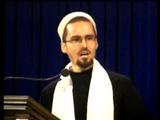
If I recognize it correctly, this an earlier video excerpt of Sh. Hamza at the University of Toronto.


Three minutes of your life will be very well spent if you listen to this, insha'Allah :)